

Why Are My Kids So Hard to Handle in Summer? How Routine Loss Affects Behavior (and Your Sanity)
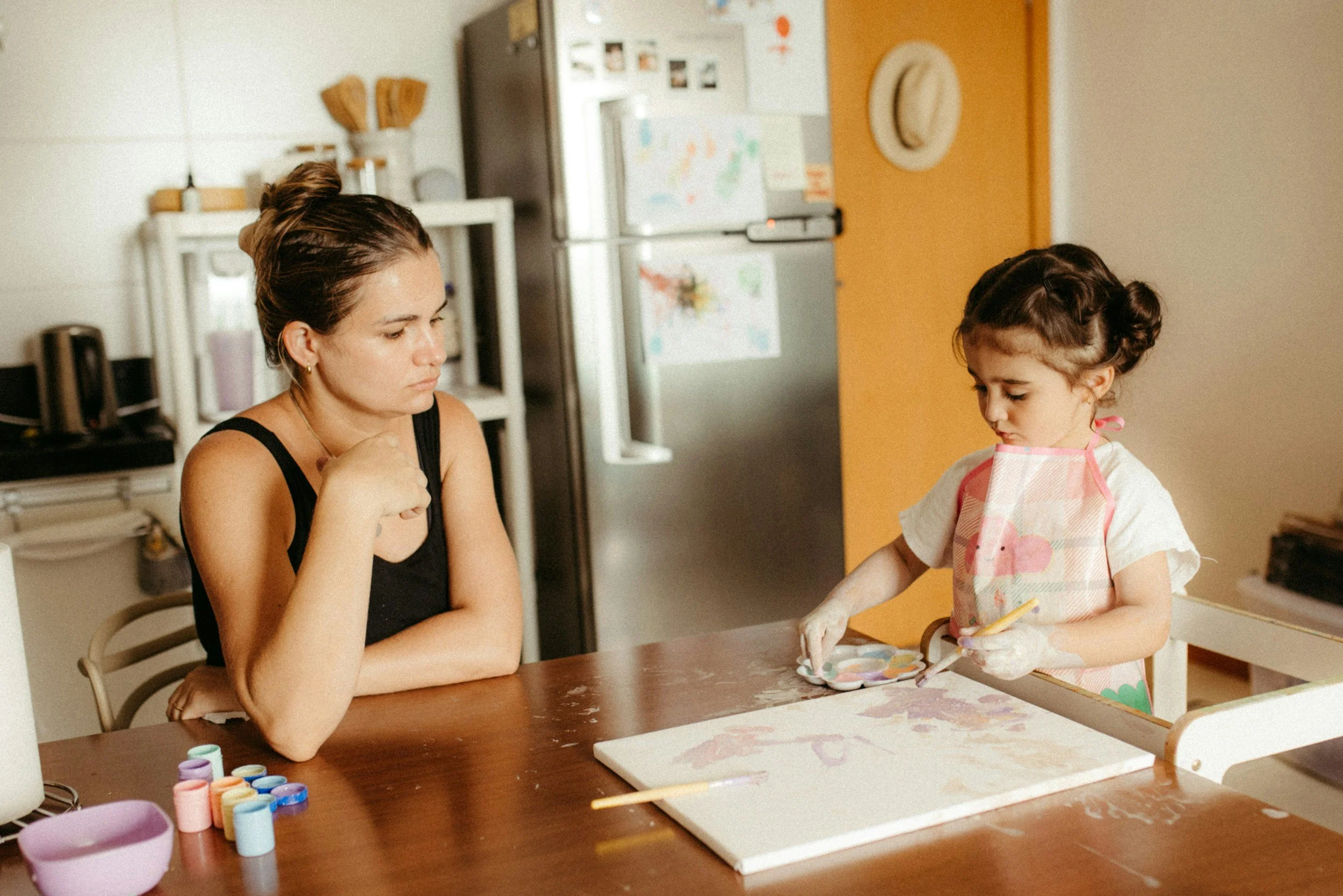
It starts somewhere around the second week of summer. The novelty has worn off. The kids are bored, irritable, and seemingly unable to function without three reminders to do anything. You're fielding more meltdowns before 9am than you did all of April. And underneath the exhaustion, there's a question: Is this me? Did I do something wrong?
You didn't. What you're watching is your child's nervous system trying to find its footing without the invisible scaffold that school provides. Routine isn't just logistical. For kids — and for the parents holding everything together — it's also biological. When it disappears, behavior changes. Often dramatically. Understanding why that happens doesn't make the meltdowns easier in the moment, but it does help them make sense.
Key Takeaways
Children rely on routine as a regulatory system, not just a schedule. When it disappears, behavior dysregulation is a predictable neurological response.
Summer behavior changes are not a parenting failure. They reflect your child's nervous system adapting to a fundamentally different environment.
The "summer slide" in behavior often looks different from the academic version — it shows up as irritability, sensitivity, conflict, and difficulty transitioning between activities.
Small, consistent anchor points can restore enough predictability to reduce the friction significantly — without recreating a school-year schedule.
If you're postpartum, your first summer with a baby adds an extra layer. Your own regulation is under pressure at the same time your child's is.
What Routine Is Actually Doing for Your Child's Brain
School provides something most parents don't consciously register: an externally regulated environment. Your child knows what comes next. They know when they eat, when they move, when they sit, when they get to be loud. That predictability isn't just convenient — it offloads a significant amount of cognitive and emotional regulation work from their developing nervous system.
When summer arrives and that structure evaporates, the nervous system has to do more of that work on its own. For most kids, especially those who are younger, more sensitive, or who have experienced any kind of early stress or trauma, that's a significant ask. The result often looks like behavioral regression: whining that stopped a year ago comes back, transitions become battles, sibling conflict spikes, and the capacity to tolerate even small frustrations drops noticeably.
This is not your child acting out to manipulate you. It's your child's system signaling that it's working harder than usual and not finding the anchor points it has learned to rely on.
The Specific Ways Summer Dysregulation Shows Up
Parents often describe the same cluster of changes, even if they don't know they share a name:
Increased irritability and low frustration tolerance
Things that didn't used to be a problem — the wrong cup, a sibling looking at them wrong, dinner not being their first choice — suddenly become catastrophic. This is a classic sign of a nervous system that's already working at capacity. There's no reserve left for the minor inconveniences.
Difficulty with transitions
Switching from one activity to another, even to something enjoyable, becomes a flashpoint. The child who moved smoothly through a school day schedule is now melting down every time screens end. Transitions require flexibility, and flexibility requires available regulatory resources. Summer depletes those resources faster.
More conflict with siblings and parents
Without the natural separation that school provides, kids are together more — and in closer quarters, often without adequate stimulation, structure, or outlets for energy. Conflict goes up. And because you're also carrying more of the logistical and emotional weight of summer, your own capacity to absorb and redirect that conflict is thinner than it was in March.
Sleep disruption feeding everything else
Later bedtimes, irregular wake-ups, less physical exhaustion from the school day — sleep changes in summer have a downstream effect on mood, behavior, and regulation that most parents underestimate. A dysregulated sleeper is a dysregulated kid the next day.
What This Means for You, the Parent Holding It Together
Here's something the parenting content rarely says directly: when your child is dysregulated, your nervous system picks that up. Not because you're doing something wrong. Because you're a human in relationship with a small human who is signaling distress, and your system is designed to respond to that signal.
That's why summer can feel so relentless even when, on paper, it should be easier. You're co-regulating with someone who needs more regulation than usual, while your own reserves are also being stretched by changed schedules, fewer external supports, and the particular exhaustion of being needed constantly.
If you're in your first postpartum summer, this is worth naming explicitly. You're managing your own postpartum recovery — still, even if the baby is no longer a newborn — alongside the behavioral changes of an older child who has lost their routine. Postpartum anxiety in particular can make the hypervigilance of summer parenting feel unbearable. If that resonates, you're not alone and you're not overreacting.

What Actually Helps: Anchor Points, Not Full Schedules
The research — and clinical experience — points to the same thing: you do not need to recreate school at home. What you need is enough predictability that your child's system can stop searching for the next anchor point and start actually settling.
Two to three fixed points per day
These don't have to be elaborate. A consistent wake time, a predictable lunch, a defined wind-down before bed. Three anchor points give a child enough structure to be able to tolerate the open space in between. Without them, the whole day feels ambiguous, and ambiguity is expensive for a developing nervous system.
Movement before the hard parts
If there's a transition you know will be difficult — screens ending, leaving the pool, going to a sibling's activity — build in physical movement beforehand when you can. The nervous system regulates more easily from a state of physical engagement than from sedentary waiting.
Naming what's happening, not just managing the behavior
"You're having a really hard time right now because we stopped something you were enjoying. That makes sense." You don't have to make the meltdown stop immediately. Naming the experience — in simple, concrete language — helps a child's prefrontal cortex start to come back online. It also communicates that their internal experience is something you can hold, which is itself regulating.
Protecting your own regulation
This is not a throwaway line. You cannot co-regulate from empty. What that looks like practically is different for every parent — five minutes alone, a text to a friend, not taking every meltdown personally — but the through-line is the same. Your nervous system is the container for your child's. That container needs to be refilled.
When the Summer Struggle Is Pointing at Something Bigger
For most families, the pattern I've described eases when some structure returns — whether that's a camp schedule, a consistent daily rhythm, or the start of school. But sometimes summer dysregulation reveals something that was already under pressure and just became visible without the scaffolding of the school year.
If you're noticing that your child's struggles feel qualitatively different from previous summers — more intense, more pervasive, not improving with increased structure — that's worth paying attention to. Similarly, if your own capacity to cope with summer parenting has dropped significantly, that's not a character flaw. It's information about what you might need support with.
Summer is long. And the version of it that's advertised — relaxed, joyful, everyone thriving — isn't always what shows up. That gap between the expectation and the reality is its own kind of weight. But your child's hard behavior isn't evidence that something is wrong with your family. It's evidence that small humans need structure more than we sometimes realize, and that figuring out how to provide enough of it in the middle of July is genuinely hard.
Ready to Get Support?
If summer parenting is stretching you thinner than you expected, or if your child's behavior has you worried, talking to a therapist who understands family systems and nervous system regulation can help. We work with parents navigating exactly this -- the gap between how parenting is supposed to feel and how it actually feels.
Frequently Asked Questions
Q: Is it normal for kids to regress in behavior over summer?
Yes — behavioral regression during summer is extremely common and well-documented. Without the regulatory structure of the school year, children's nervous systems have to work harder, and behaviors that had resolved or reduced often temporarily return. This is not a sign of a developmental problem or a parenting failure.
Q: How much structure does my child actually need in summer?
Research suggests that two to three consistent anchor points per day — a wake time, a meal, a wind-down routine — are enough to provide the predictability a child's nervous system needs, without requiring a rigid hour-by-hour schedule. Quality of predictability matters more than quantity.
Q: My child seems more anxious in summer, not just irritable. Should I be concerned?
Anxiety can spike in summer for some children, particularly those who use the structure of school as an external regulation tool. If anxiety feels more persistent, more intense, or significantly different from previous summers, it's worth consulting with a mental health professional who works with children and families.
Q: I'm postpartum and really struggling with summer parenting. Is that different from regular parenting stress?
Yes, meaningfully so. Managing a baby's needs, your own postpartum recovery, and an older child's increased behavioral needs simultaneously is a significant load. Postpartum anxiety in particular can make the sensory and logistical intensity of summer feel overwhelming in ways that go beyond typical parenting fatigue. Support is available.
Q: What if I've tried adding structure and it's not helping?
Some children need more targeted support than general structure can provide -- especially children who carry anxiety, have experienced early stress, or are navigating a significant family change. If increased predictability isn't moving the needle, a therapist who specializes in child and family work can help identify what else might be driving the dysregulation.
About the Author
Yael Sherne is a California licensed marriage and family therapist (LMFT 128601) and the founder of Mother Nurture Therapy Group. With nearly a decade of experience and specialized training in perinatal mental health, couples therapy, and trauma, she supports individuals and couples navigating fertility, pregnancy, postpartum, and parenting.
Disclaimer
The content on this blog is for informational and educational purposes only and is not intended as a substitute for professional mental health treatment. If you are experiencing a mental health crisis, please call 988 (Suicide & Crisis Lifeline) or go to your nearest emergency room. Mother Nurture Therapy Group provides therapy services in California. For personalized support, please contact us to schedule a consultation.