

Why Do I Snap and Then Feel Like a Terrible Mother? What's Actually Happening in Your Nervous System
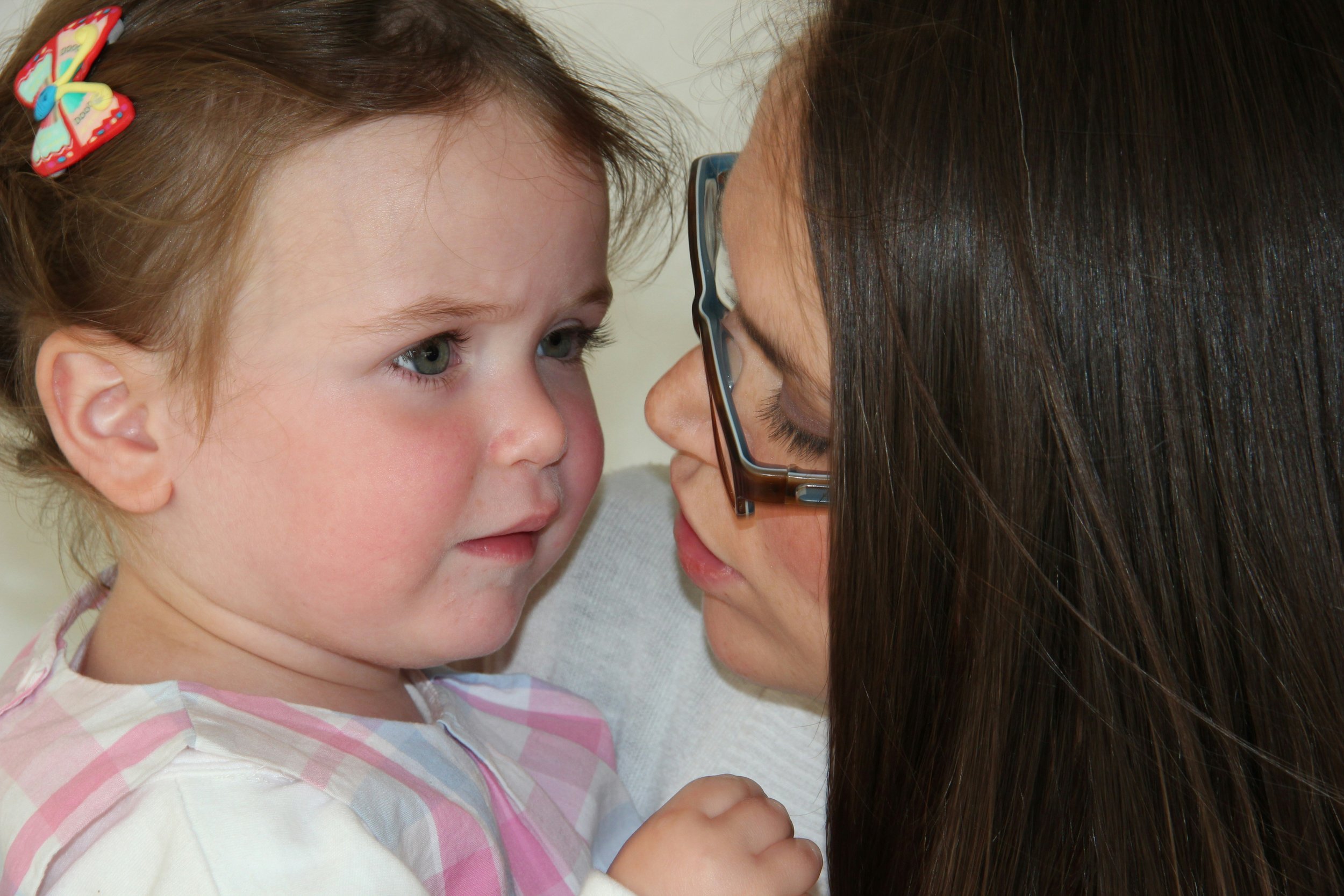
It's the same fight it is most mornings. You've asked four times for her to put on her shoes. The fifth time, your voice comes out louder and sharper than you meant it to, and your toddler's face changes in a way that lands deep in your chest before you've even finished the sentence. The shame arrives almost instantly, a familiar internal script that says this is proof you’re doing parenthood all wrong.
As a therapist and a mom of two, I want to say something plainly before anything else: the yelling is not the whole story, and it is not proof that you are failing at this. What's underneath the snap, and what happens in the minutes after it, matters far more than the moment itself. This is one of the most common things parents bring into session, almost always with more shame attached than the moment actually warrants.
Key Takeaways
Snapping at your child is usually a sign of an overwhelmed nervous system, not a character flaw or a failure of love
Everyday stress, not just your child's behavior, is one of the strongest predictors of reactive parenting moments
Your own history of how conflict and emotion were handled in childhood shapes how quickly you reach this point
Repair after a rupture matters more for a child's long-term security than the rupture itself
Generational patterns can be interrupted, and that process doesn't require never losing your temper again
The Moment You Snap and the Moment Right After
There's the snap itself, and then there's the second wave, the flood of shame that shows up almost before your voice has settled. This part comes with a story attached: I am becoming the parent I swore I wouldn't be, or, a good mother wouldn't lose it like this over shoes.
That story deserves to be questioned, not because the yelling didn't happen, but because the conclusion drawn from it usually isn't accurate. An overwhelmed nervous system will reach for its loudest available tool, the one that has been around for so long it is essentially automatic. This says far less about your character than it feels like in the moment.
As both a therapist who has sat with hundreds of parents in this exact shame spiral, and a mother who has stood in her own kitchen wishing she could take the last thirty seconds back, I can tell you the pattern is remarkably consistent. The parents who carry the most shame about snapping are, almost without exception, the ones paying the closest attention to their children's wellbeing in the first place. The capacity for that much shame doesn't come from indifference.
What's Actually Driving the Snap
Research on parenting stress consistently points to a specific pattern: it's rarely the child's behavior alone that produces a reactive outburst. Everyday accumulated stress, running late, financial pressure, exhaustion, an overflowing mental load, reliably predicts spikes in harsh or reactive parenting far more than any single moment of a child's defiance. When you’re running on empty, a nervous system reaches for a quick and known release, and yelling is often exactly that: a release, not a decision.
This matters because it reframes the question. The issue usually isn't whether you love your child enough or have enough patience in the abstract. It's whether your nervous system had any capacity left when the fifth shoe request came in.
Why Your Own History Is Part of This
Not every overwhelmed parent reaches for yelling at the same threshold, and that's where your own history comes in. If conflict in your childhood home escalated quickly, or if your own big feelings were met with punishment rather than patience, your nervous system may have learned early that loud is how you get through to someone, or that staying calm under pressure was never modeled for you to learn.
This is generational, and naming it isn't about blame. It's about understanding why this specific moment, shoes on a Tuesday morning, can access something that goes back further than your own parenting. Once you can see the pattern clearly, you have more room to respond differently than you did before you saw it.
Why Repair Matters More Than the Rupture
Here is the part that tends to bring the most relief in session: research on attachment consistently shows that occasional ruptures, brief moments of disconnection like yelling, don't determine a child's long-term security. What matters is whether repair reliably follows. A simple, honest acknowledgment afterward, I yelled, and that probably felt scary, I'm sorry, does more relational work than most parents realize.
This also touches your relationship with a partner, if you have one. How a partner responds in the minutes after you've snapped, whether with judgment, silent tension, or steady support, shapes how quickly you can move from shame into repair. Couples who can name this pattern together, rather than treating it as one person's individual failing, tend to break the cycle faster than either partner alone.
Repair doesn't require a perfect script. It requires showing up again, honestly, without disappearing into either denial or self-punishment.
Catching It Before the Snap
Once you understand that reactivity is usually about capacity rather than character, the more useful question shifts from how do I never yell again to what does my nervous system actually need before the fifth shoe request. Sometimes that's genuinely small: water, a snack of your own, thirty seconds alone before walking back into the room. Sometimes it's bigger, a conversation with a partner about the mental load, or your own therapy to work through what makes this particular kind of stress hit you so hard.
Noticing your own early warning signs, a tightening jaw, a held breath, a rising internal voice that says I can't do this one more time, gives you a small window to intervene before the nervous system takes over completely. That window won't always be wide enough. It doesn't need to be, every time, for the pattern to shift over time.
This is also where partnership matters, if you have one. A partner who can step in for five minutes when they notice you're near the edge isn't rescuing you from a failure. They're extending the capacity your own nervous system has run out of for the moment, which is exactly what partnership is supposed to do during the hardest stretches of parenting.
A Final Word
The goal was never to become a parent who never raises her voice. That version of parenting doesn't exist outside of curated feeds. The real work is smaller and more human than that: noticing when the tank is empty before it overflows, and coming back honestly when it overflows anyway. Your child does not need a mother who never ruptures. They need one who reliably returns.
Ready to Get Support?
If yelling has become a pattern that worries you, or if the shame afterward feels bigger than the moment itself, that's worth exploring in a space that understands both your nervous system and your history. We work with parents on exactly this kind of generational pattern.
Frequently Asked Questions
Q: Does occasional yelling damage my child long term?
A: Research on attachment suggests that occasional, non-demeaning ruptures followed by genuine repair do not doom a relationship to lasting harm. It's a consistent pattern of harsh discipline without repair that carries more risk.
Q: What does a good repair actually sound like?
A: A simple, honest acknowledgment works better than an elaborate explanation. Something like, I yelled and that was scary, I'm sorry, followed by genuine presence, tends to land better than over-explaining or over-apologizing.
Q: Why do I feel so much shame about this specifically?
A: For many parents, the shame around yelling is disproportionate to the moment itself because it activates older beliefs about what being a good mother requires. That shame is worth exploring on its own, separate from the parenting moment that triggered it.
Q: Is this something I can work on alone, or does it need therapy?
A: Some parents make real progress noticing and naming their own patterns independently. If the reactivity feels tied to deeper history, or if shame is interfering with your ability to repair afterward, therapy can help untangle what's underneath it more directly.
Q: How do I stop the shame spiral after I've already yelled?
A: Naming the shame out loud, even just to yourself, as a feeling rather than a fact tends to loosen its grip faster than trying to reason your way out of it. Repair with your child, then, separately, tending to your own shame, are two different tasks that both deserve attention.
About the Author
Yael Sherne is a California licensed marriage and family therapist (LMFT 128601) and the founder of Mother Nurture Therapy Group. With nearly a decade of experience and specialized training in perinatal mental health, couples therapy, and trauma, she supports individuals and couples navigating fertility, pregnancy, postpartum, and parenting.
Disclaimer
The content on this blog is for informational and educational purposes only and is not intended as a substitute for professional mental health treatment. If you are experiencing a mental health crisis, please call 988 (Suicide & Crisis Lifeline) or go to your nearest emergency room. Mother Nurture Therapy Group provides therapy services in California. For personalized support, please contact us to schedule a consultation.